By Connor Boring-Mackie
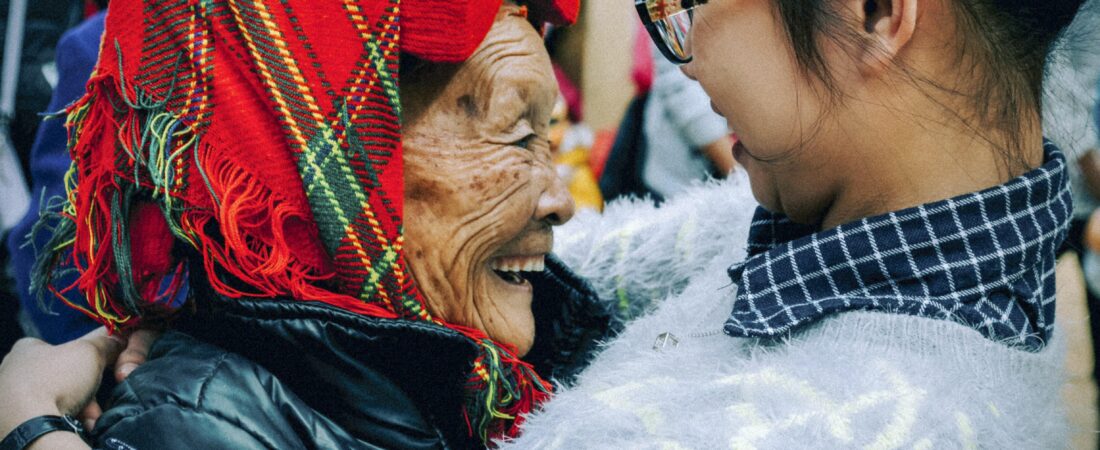
Long before loneliness was declared a public health crisis, music educators and therapists were already building the kinds of human connections that public health experts now say people desperately need.
After nearly two decades teaching piano at MacPhail Center for Music in Minneapolis, one student comes to mind when John Iverson tries to explain what music does for people. He was eighty-two years old, and he had come in for his first lesson after losing his wife unexpectedly — the kind of loss that doesn’t come with instructions. But he knew exactly what he wanted: to play for her. Over the course of months of lessons, Iverson taught him the pieces they had listened to together. As far as Iverson knows, his student still plays them for her every night. “It doesn’t go anywhere toward healing the wounds of losing a dear loved one,” Iverson says. “But it takes him just a little step further toward becoming more whole as a person.”
In 2023, U.S. Surgeon General Vivek Murthy issued a formal advisory naming loneliness one of the defining public health challenges of our time. The institutions best positioned to address it are not only the hospitals and policy offices making decisions — they are the community spaces that have always brought people together, spaces that have been quietly disappearing for decades. Music alone cannot prevent that loss. But certain music educators and therapists have spent their careers focused not on how well someone plays, but on what music can do for the person playing. These people do public health work, and this feature explores why the world needs more of them than it knows.
When the Center of Gravity Disappears
It was below zero in Minneapolis on March 17th, and John Iverson had already had a long morning before any conversation had begun. A storm earlier that week brought a tree down in his yard, and he had a crew coming to take it down that day. When he appears on the Zoom screen, his piano sits to his left, and behind him, his desk disappears under sheet music and paperwork. Through the window, one can see the snow piling. He is someone who knows what he wants to say and moves toward it — not rushed, but purposeful — with the particular generosity of someone who has spent a long time thinking carefully about things and has learned how to be open with that thinking.
Iverson is the Director of Instrumental and Vocal Instruction at MacPhail Center for Music, one of the largest community music schools in the United States, where he oversees roughly 110 faculty members teaching students of all ages, backgrounds, and skill levels. He holds a doctorate in educational leadership — a degree he did not pursue out of ambition, but because becoming a father convinced him that his life’s work was no longer about his own performance. That shift comes through in the way he speaks, and in how genuinely he seems to mean it.
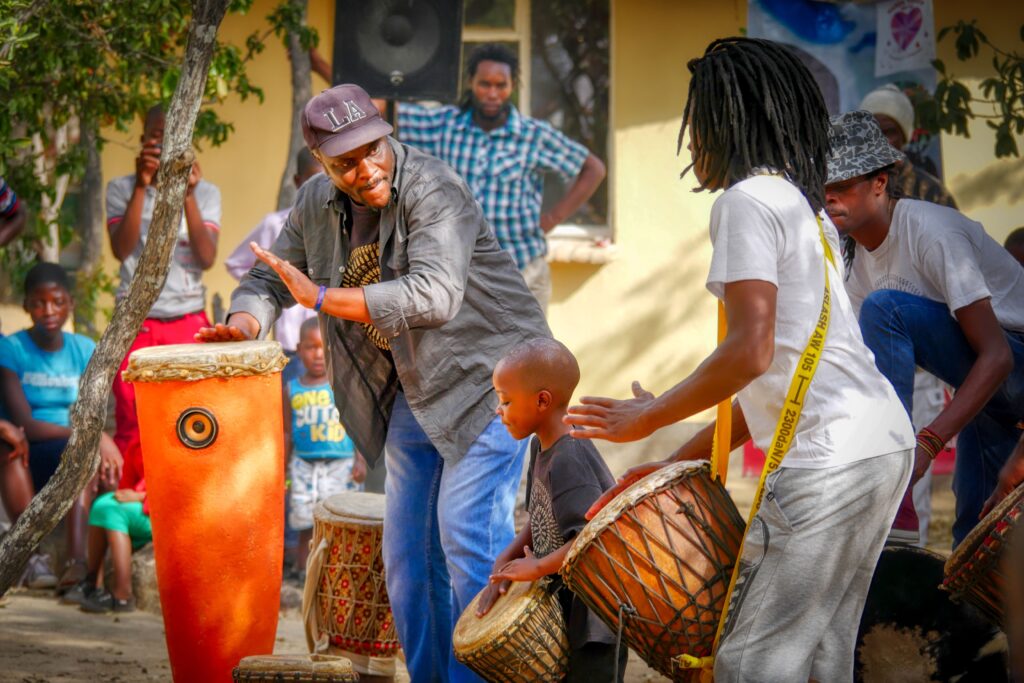
He has been sitting with a question that goes beyond music, or at least beyond music as most people understand it: what does music actually do for people, and what do we lose when it disappears from the fabric of daily life? His answer starts with something he calls a community center of gravity — the town halls, city plazas, and religious institutions that together once drew people across whatever had been keeping them apart. Nevertheless, with the advent of technology, forces from many directions work to decentralize that gathering point. Technology companies designed social media to capture our attention and fill that space, but “at the end of the day,” Iverson says, “it just leaves us hollow, it leaves us empty.”
What Iverson names from inside a community music school, political scientist Robert Putnam has documented: across the United States, civic and associational life — PTA membership, union participation, fraternal organizations, neighborhood socializing — has all been collapsing for decades. More Americans were bowling than ever, but they were bowling alone (Putnam).
That relational cost showed up in Iverson’s students. Adults arrived at MacPhail, saying they are not good enough, not trained enough, and not the kind of people who do this sort of thing. However, after the course of his twenty years at MacPhail, he knows that is the point:
“To heck whether or not other people want to pay you money for it. That is not why we do art.”
To establish his point, he reaches back to our ancestors who painted on cave walls, not for anyone to see or pay them. Art is the expression of the human experience, untethered from financial compensation. The way the music industry has made it nearly impossible to imagine making something without imagining an audience paying for it. In Iverson’s view, it is a historical aberration — and one that is doing real damage to people who needed music long before it was ever a product.
Ethnomusicologist Thomas Turino identifies what Iverson describes. In participatory music traditions, there are no formal distinctions between performers and audience — everyone present is considered a participant, meaning success is determined by the depth of collective engagement rather than the quality of sound produced (Turino 98–99). The same feature that makes participatory music socially powerful also makes it economically marginal: anyone can join at any skill level, which means there is nothing to sell (Turino 110).
When the pandemic closed MacPhail in March 2020, Iverson — serving as student performance coordinator — was forced to move every student recital online within weeks. Students performed from their living rooms instead of on a stage, but something about the structure of it gave them purpose. It was a reason to get ready, a reason to be accountable to another person on the other end of the screen they were performing for. “It was really, really important to keep mental health afloat during that time,” he says. “The music people had in their living rooms during the pandemic was not a performance. It was a reason to show up for something, and someone to show up for.”
What was at stake, Iverson has come to understand, was never the stage. A meta-analysis of more than 3.4 million participants across 70 independent studies found that social isolation and loneliness each independently increased the likelihood of early death by 26 to 32 percent — an effect comparable in magnitude to smoking and obesity, and more pronounced for adults under 65 than those over it (Holt-Lunstad et al.).
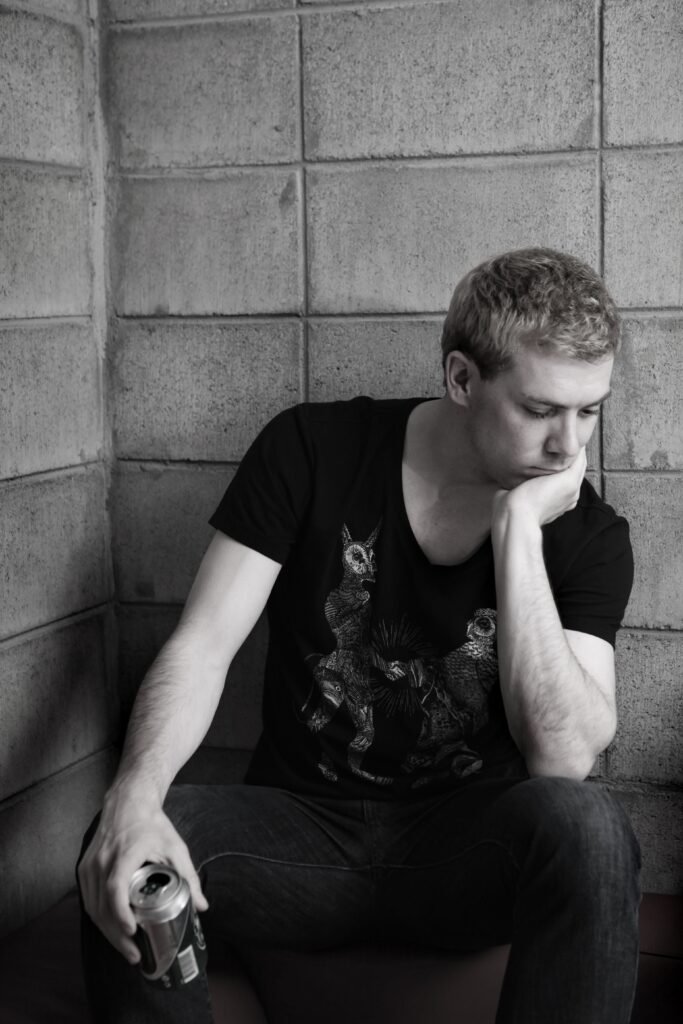
Having a reason to show up for something is not a cultural amenity, but the infrastructure that makes that possible is disappearing. A Minnesota Department of Education grant once allowed MacPhail faculty to teach directly in schools, where music programs — after-school jazz bands, strings programs, and on-site instruction — were available to students who had no other access. That grant has since been removed. For some communities, when that funding disappeared, the music ceased to exist entirely.
Not just the program. The music.
Iverson does not call what comes next despair. He calls his own position realistic optimism — grounded in the belief that structural conditions may be ripening for a shift, a moment when enough people have felt the hollowness long enough to turn toward something else. Musicians, he thinks, understand holding on to hope better than most.
“It is the hope,” he says. “It is the hope and the focus.”
Where the Music Actually Lives
When experiencing Melissa Wenzel’s music through a screen, her orange plastic trumpet, sitting behind her, shone like the sun. With its plastic body, it was weatherproof — rageproof — and very easy to clean between sessions. She, however, was very careful to express that it always has a metal mouthpiece: it was currently missing one for reasons unknown.
From there, it was clear she designed her office to be inviting: an accordion, a keyboard, a vestibular swing, a flaming djembe. A couch. She chose an electric piano because she can lift it — she sees clients in wheelchairs, and the instrument needs to come to the person. To do so, she built a ramp herself and engineered a hook to attach to the piano stand, lowering the sheet music to a level closer to the keys. For students with motor coordination disabilities, “It is a barrier that is not apparent until you experience it,” she says.
Every accommodation she made came from watching. Standard sheet music sits high above the keyboard, and for someone rebuilding after a stroke — or anyone whose brain has to work harder than usual to translate what the eye reads to what the hand does — that distance is a mountain. Wenzel noticed that it was where people lost the thread, a belonging in her space, and she did what she could to close that gap.
As a board-certified music therapist in Minneapolis, everything in her room reflects a conviction about who music is for and what it should do.
When a client arrives with high anxiety — heart rate elevated, breath shallow — their nervous system is already experiencing a threat response; telling them to calm down does not work. The limbic system’s emotional response prevents verbal instructions from being processed within the cerebral cortex, and knowing this, Wenzel helps guide them through the experience. She begins with bilateral drumming — playing different rhythms with each hand and foot simultaneously — at the client’s own level of arousal, before gradually slowing the tempo.
By meeting them where they are, Wenzel entrains her client’s brain to her external beat without them consciously choosing to slow down. As the tempo drops, the nervous system follows. By additionally integrating breathwork through an instrument such as a harmonica or something that requires resistance — like a metal mouthpiece — Wenzle imbues the music her clients perform with therapeutic qualities.
“Breathing is a central pattern generator, just like the beat,” she says. “The body responds to rhythm without being directed to do so. It is biology, not instruction.”
Wenzel sees this play out in group settings as readily as in individual sessions. At Oxford, researchers tracked newly formed adult education classes over seven months. They found that singers bonded with strangers significantly faster than participants in any other group activity — a difference they linked to the endorphin release triggered by synchronized physical effort (Pearce et al.). Through her own knowledge, Wenzel knew the mechanism before the study named its broader influence.
Many of her clients, however, have lived in a sustained state of threat for so long that their brains have forgotten another way of being. “The brain doesn’t know a sense of safety,” she says. “It’s in this constant anxiety.” Deep breathing is not a skill these clients lack — it is a state the brain will not allow. They learned that relaxation is an unsafe space. For these students, having guidance from a professional like Wenzel is best to build their experience from nothing. But for those with general anxiety, being in choral spaces helps to change this slowly and imperceptibly: a sustained phrase requires a full breath, regardless of ability.
For many of Wenzel’s clients, that is exactly what the music space becomes over time — the place where the nervous system finally learns it can let go. It is the way music teachers develop a caring, non-familial bond with their students. Unlike most teachers, whose students move on at the end of a school year, students often stay with their music teachers. They are there through puberty, through family disruption, through everything a young person cannot bring to a parent or a teacher whose job includes grading.

“You’re their person,” Wenzel says. “You love them no matter what.”
Students hold it together all day — at school, at home, wherever it is required. But the space within music is different. It is non-evaluative by nature, and for a student whose teacher has known them since they were small, it becomes the place where what once was carried can finally be released. Sometimes it is the only place safe enough for that.
When Wenzel plays a recording back for a client who has done something they said they could not do — held a phrase, sustained a breath, produced a note — she waits for a specific moment when the client hears themselves. There is a beat of recognition when the person has to reckon with the gap between the story they told about their own capacity and what is playing back in the room.
She calls it the power of yet and waits for their “oh” — the quiet moment when someone reimagines what is true about themselves.
Research across 61 studies found that regular involvement in community music and singing can protect adults against isolation, depression, and declining mental health throughout their lives, with the strongest and most consistent evidence among older adults (Daykin et al.). The same research found that community choir participants tend to be female, white, and relatively well-educated — a pattern that raises a quiet but serious question about who the existing infrastructure is not reaching.
What Took So Long to Name
Richard Settersten has been asking his students the same question for years: “How many of you have a close, connected relationship with someone over the age of 65 who is not a family member?”
Every year — no hands raise.
Settersten is a professor emeritus of Human Development and Family Sciences at Oregon State University, and he has spent his career studying the architecture that holds human lives together — how people move through it, how they lose each other, and what that losing costs across a lifetime. He does not ask the question to make a point. The silence that answers it is the point.
Modern life has sorted human experience into distinct chambers. Education draws people into age-cohorts. Work runs for decades through the middle. Retirement waits at the end. The tripartite model — learn, then work, then retire — is not just a description of how lives are organized. It is a description of how people stop meeting. And it is one of several ways ordinary life produces social isolation without anyone choosing it.
Transitions compound the problem. Changing schools, changing jobs, moving cities — each one shifts who a person can reach and who can reach them. Some relationships go dormant. Others end. What accumulates over a lifetime of ordinary disruptions can leave a person without the relational infrastructure on which health depends, through no single decision of their own (Settersten et al.).
Families have become more vertical — more generations alive at once, but with fewer people in each. People are more likely now to outlive those who knew them longest. When that kin is gone, what remains are the relationships that were chosen rather than assigned — what the literature calls fictive kin, people who become family without being designated as such. These carry no clear norms of obligation. When need arrives suddenly, it is unclear who is responsible (Settersten).
A meta-analysis of more than 3.4 million participants across 70 independent prospective studies found that social isolation, loneliness, and living alone each independently increased the likelihood of early death — with effects comparable to smoking and obesity, and stronger for adults under 65 than those over it (Holt-Lunstad et al.). Decades ago, researchers made similar observations about obesity before it had a name in a public health advisory. The world caught up eventually.
“Much of ‘personal’ aging is actually interpersonal,” Settersten has written (Settersten). The conditions that produce isolation are social in origin—the consequences land in the body.
How far into the body, researchers are still learning. A University College London study of approximately 3,500 adults found that regular arts engagement — making or experiencing art — was associated with biological aging rates roughly 4 percent slower than in non-participants, a reduction comparable in effect size to regular physical exercise (Juhasz). One cardiologist described it as a non-pharmacological intervention. The finding awaits replication, but the direction it points is clear: what happens in rooms like Iverson’s and Wenzel’s may reach the body’s molecular clock.
The Hope that Stays
Somewhere in Minneapolis, an eighty-two-year-old man is still at the piano.
Iverson does not know which evening, which piece, which room. He only knows the man is still there — still playing the songs he and his wife used to listen to together, still playing for her, in whatever way that means something now.
“Music has always been a fundamental attribute of human existence,” Iverson says. “Fundamental.”
Bibliography
Aubrey, Allison. “Engaging with the Arts Can Slow Biological Aging, Study Shows.” NPR, 12 May 2026, www.npr.org/2026/05/12/nx-s1-5818172/study-arts-slow-biological-aging.
Chuotanhls. “Volunteer, Girl, Smile image.” Pixabay. 16 Nov. 2021. https://pixabay.com/photos/volunteer-girl-smile-happy-nation-6800977/
Daykin, Norma, et al. “What Works for Wellbeing? A Systematic Review of Wellbeing Outcomes for Music and Singing in Adults.” Perspectives in Public Health, vol. 138, no. 1, 13 Nov. 2017, pp. 39–46, https://doi.org/10.1177/1757913917740391.
Fietzfotos. “Drums, Festival, African Image.” Pixabay. 26 Jan. 2021. https://pixabay.com/photos/drums-festival-african-people-kid-5949725/
Holt-Lunstad, Julianne, et al. “Loneliness and Social Isolation as Risk Factors for Mortality: A Meta-Analytic Review.” Perspectives on Psychological Science, vol. 10, no. 2, Mar. 2015, pp. 227–237, https://doi.org/10.1177/1745691614568352.
Iverson, Jon. Interview by Connor Boring-Mackie. 16 May 2026. Phone Interview.
Iverson, Jon. Interview by Connor Boring-Mackie. 17 Mar. 2026. Zoom Interview.
Pearce, Eiluned, et al. “The Ice-Breaker Effect: Singing Mediates Fast Social Bonding.”Royal Society Open Science, vol. 2, no. 10, Oct. 2015, p. 150221, https://doi.org/10.1098/rsos.150221.
Putnam, Robert D. “Bowling Alone: America’s Declining Social Capital.” Journal of Democracy, vol. 6, no. 1, Jan. 1995, pp. 65–78, https://doi.org/10.1353/jod.1995.0002.
Ronreezy. “Thinking, Man, Person image.” Pixabay. 12 June, 2019. https://pixabay.com/photos/thinking-man-person-sad-alone-4271437/
Settersten, Richard A. Interview by Connor Boring-Mackie. 15 May 2026. Zoom Interview.
—. “Nine Ways That Social Relationships Matter for the Life Course.” Frontiers in Sociology and Social Research, 1 Jan. 2018, pp. 27–40, https://doi.org/10.1007/978-3-319-71544-5_2. Accessed 13 Dec. 2025.
—. “Some Things I Have Learned about Aging by Studying the Life Course.” Innovation in Aging, vol. 1, no. 2, 1 Sept. 2017, https://doi.org/10.1093/geroni/igx014.
Turino, Thomas. “Four Fields of Music Making and Sustainable Living.” World of Music, vol. 51, no. 1, 1 Jan. 2009, pp. 95–117, https://doi.org/10.2307/41699865.
Vacchiano, Mattia, et al. “Networked Lives: Probing the Influence of Social Networks on the Life Course.” Advances in Life Course Research, vol. 59, 1 Mar. 2024, pp. 100590–100590, https://doi.org/10.1016/j.alcr.2024.100590.
Wenzel, Melissa. Interview by Connor Boring-Mackie. 16 May 2026. Zoom Interview.